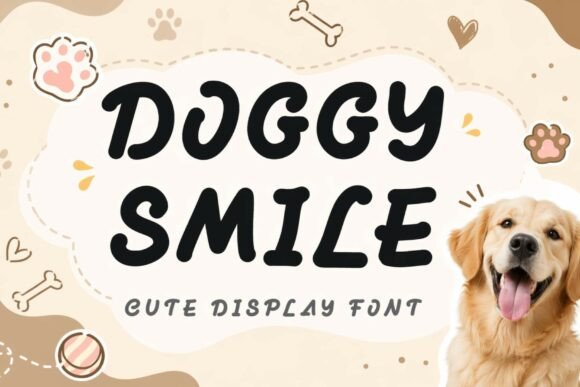
Doggy Smile Font Review
Choosing the right font for a blog header can feel like selecting the perfect accessory for a special occasion. It needs to catch attention, reflect the tone of the content, and fit seamlessly into the overall design. When I first encountered Doggy Smile, it felt like discovering a playful yet polished typeface that could bring a fresh energy to any editorial project.
Doggy Smile for Lifestyle Blogs and Creative Branding
Doggy Smile is a display font that blends whimsy with clarity, making it ideal for lifestyle blogs that want to express personality without sacrificing readability. Its lowercase and uppercase forms offer a balanced rhythm, while the alternates and punctuation options allow for subtle variations that keep designs from feeling repetitive. For a lifestyle publication focused on wellness, home decor, or personal development, Doggy Smile can serve as a signature typeface that reinforces a brand’s creative identity.
The font’s multilingual support also makes it versatile for international audiences or bilingual content. Whether it's used in a blog title, a section heading, or a social media graphic, Doggy Smile maintains a consistent visual appeal that feels both modern and approachable.
Using Doggy Smile in Editorial Layouts and Digital Magazines
In digital magazine layouts, Doggy Smile shines when used as a headline or pull quote. Its rounded shapes and gentle curves add a sense of warmth, which pairs well with editorial content that aims to engage readers emotionally. When paired with a clean sans serif font for body text, it creates a strong visual contrast that enhances readability without overwhelming the reader.
For example, in a feature page about seasonal trends, using Doggy Smile for the main title can draw attention while still allowing the surrounding text to remain easy to read. The font’s alternates provide flexibility for customizing headlines, ensuring each issue feels unique yet cohesive.
Doggy Smile for Recipe Ebooks and Cooking Guides
Recipe ebooks often require a mix of informative content and visual appeal. Doggy Smile can be an effective choice for titles, chapter headings, or even decorative accents within the layout. Its playful character adds a friendly tone that complements food-related content, making it feel more inviting and less rigid than a traditional serif or sans serif font.
However, it’s important to use Doggy Smile strategically. While it works well for titles and subheadings, it may not be the best choice for long paragraphs of instructions. In such cases, pairing it with a readable serif font like Georgia or a modern sans serif like Open Sans ensures that the content remains accessible and easy to follow.
Doggy Smile for Printable Planners and Coaching Workbooks
Printable planners and coaching workbooks often benefit from fonts that are both functional and visually engaging. Doggy Smile can be used effectively in headers, section dividers, or motivational quotes to add a touch of personality. Its alternates allow for subtle customization, making each worksheet feel unique and tailored to the user’s needs.
When designing a printable planner, using Doggy Smile for weekly goals or daily affirmations can create a sense of structure while maintaining a friendly tone. This makes it particularly useful for self-care, productivity, or mindfulness-focused content.
Doggy Smile for Wedding Guides and Event Branding
Wedding guides and event branding often require a balance between elegance and fun. Doggy Smile offers a perfect middle ground—its playful elements add charm without being too casual. It can be used for cover text, section headings, or decorative accents in a wedding guide, helping to establish a cohesive visual theme.
For event invitations or digital programs, Doggy Smile can add a personalized touch that feels both professional and warm. Its multilingual support also makes it a good choice for weddings with diverse guest lists or international themes.
Considerations for Readability and Practical Use
While Doggy Smile is highly expressive, it’s important to consider its limitations. Due to its stylized forms, it may not be suitable for small text sizes or dense blocks of copy. In print materials, it’s best used for headlines, captions, or short phrases rather than body text.
When using Doggy Smile in digital formats, ensure that it displays correctly across different devices and platforms. Testing it in PDF exports, mobile layouts, and web browsers can help identify any potential issues with legibility or formatting.
Before incorporating Doggy Smile into a project, check the included styles, ligatures, and file formats. Confirming the licensing terms is also essential, especially if the font will be used in commercial publications, client projects, or paid content.